The future of mycelial biomass
The efficiency of VINCI airlift bioreactors for perfect oxygenation, gentle mixing and uncompromising scale-up.
The challenge
Whole-cut meat alternatives made from filamentous fungi aim to reproduce the fibre, bite and structure of animal muscle. That depends on growing long, intact mycelial hyphae in a homogeneous culture with controlled morphology — and hyphae are mechanically fragile. In a conventional stirred tank, the impeller tip region is one of the main sources of shear damage, alongside bubble burst and high sparger-inlet velocities [1]. Excessive shear fragments the hyphae, degrading exactly the fibrous network that gives the final product its texture.
The process is therefore a balancing act: the culture needs enough oxygen transfer and mixing to sustain dense biomass growth, but delivered gently enough to preserve filament length and morphology throughout the whole vessel volume.
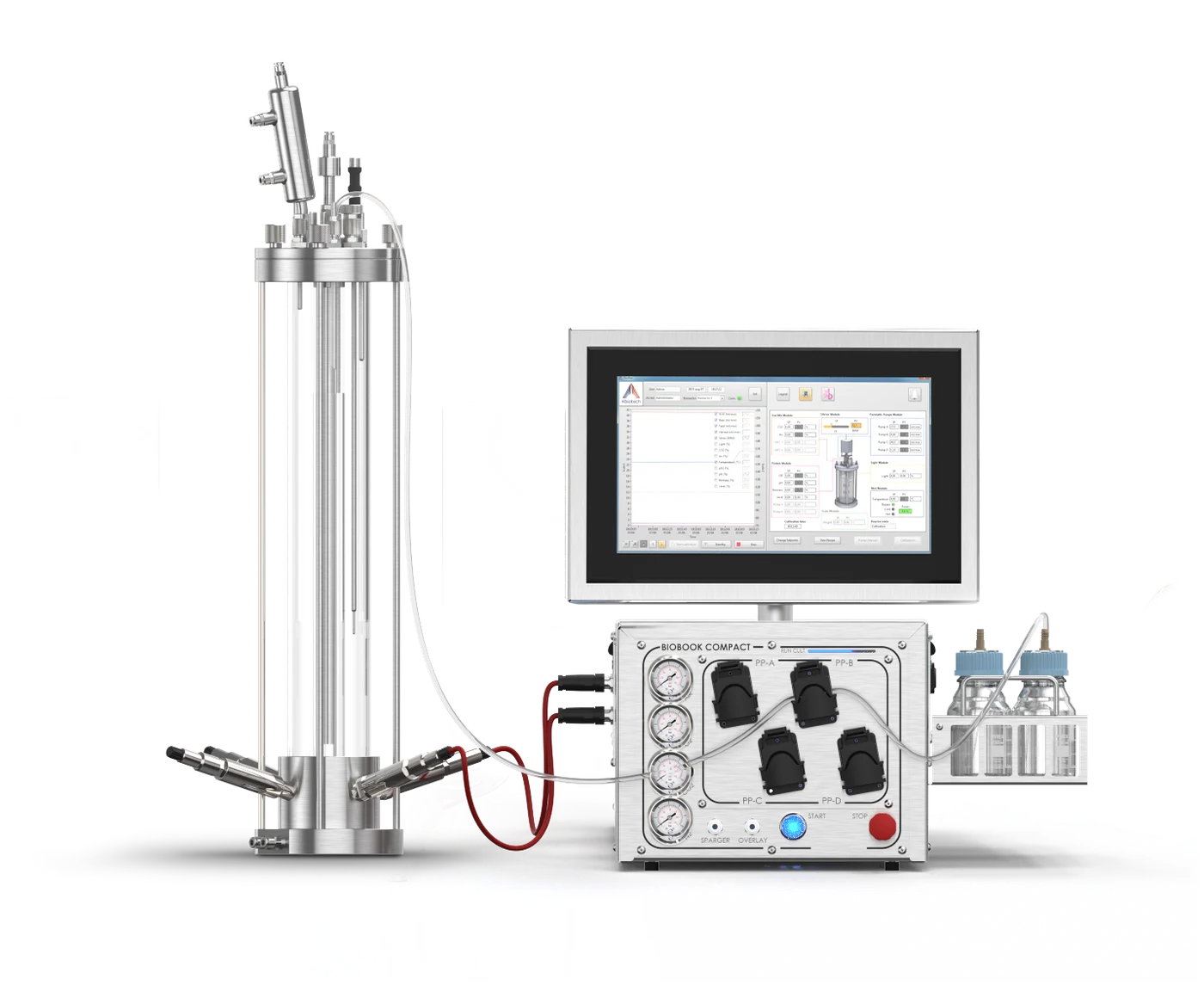
The VINCI technology applied — airlift
For this application the reference technology is the airlift bioreactor, where liquid circulation is driven by the injected gas (riser/downcomer loop) rather than by a rotating impeller. This removes the highest-shear zone in the system while still delivering oxygen and mixing.
- Impeller-free, low-shear mixing. Gas-driven circulation eliminates the impeller-tip shear that fragments hyphae, preserving the filamentous morphology that drives texture [1][2].
- Even oxygen and nutrient distribution. The riser/downcomer loop keeps gas and nutrients well distributed across the full working volume — important for uniform, dense mycelial growth [2].
- Efficient, lower-energy scale-up. Airlift geometry has no moving mechanical parts, lower power consumption and simpler cleaning; it is the established configuration for large-scale filamentous-fungi biomass (e.g. external-loop airlift reactors at 150 m³ scale) [2].
- Bioflex™ process control. Automated recipes, audit trail and FDA 21 CFR Part 11-compliant data across scales.
From research to production, one platform
The same parameters and Bioflex™ recipes carry you from bench to industrial scale, reducing transfer risk between stages.
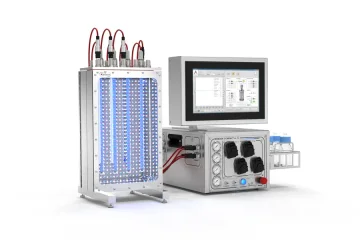
R&D In-Situ Sterilizable Bioreactors & Fermenters
BioSIP series.
See system →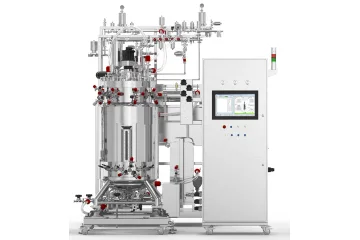
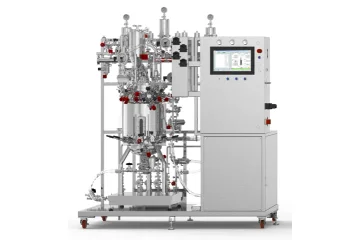
Pilot & Production In-Situ Sterilizable Bioreactors & Fermenters
BioFerm series.
See system →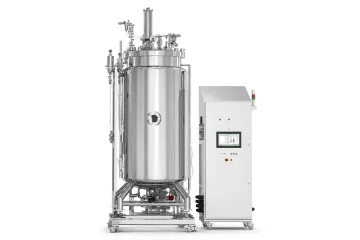
Large-Scale In-Situ Sterilizable Bioreactors & Fermenters
Custom bioreactors.
See system →Performance benchmarks
Figures below are established industry/literature benchmarks for filamentous-fungi biomass, cited to show credible ranges — not VINCI or client-owned results.
- ~150 m³ commercial airlift scale. Filamentous-fungi mycoprotein is produced commercially in external-loop airlift bioreactors with working volumes around 150–155 m³ [2].
- Impeller-free = lower shear + lower power. Airlift reactors are chosen for well-mixed gas handling, reduced cell shear, lower power consumption and reduced capital cost versus stirred tanks at scale [2].
Let’s talk about your process
Tell us about your application: our engineering team replies within 24 hours.