316L bioreactors for the laboratory
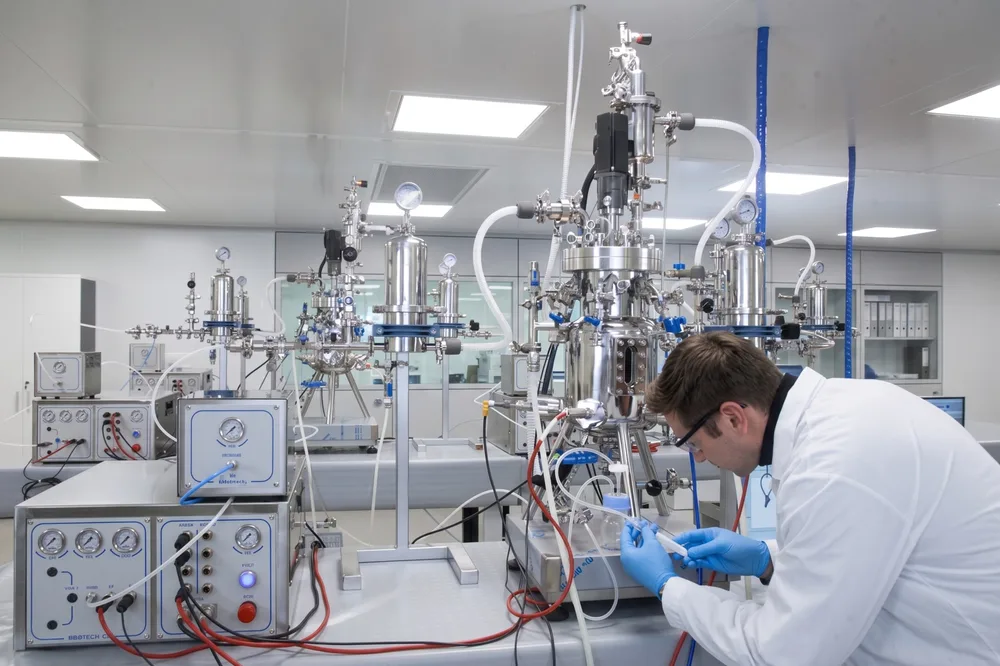
Vinci stainless steel benchtop bioreactors are engineered for robust, sterile process development and demanding R&D environments, supporting microbial fermentation, cell culture, and specialized process studies. Built in AISI 316L stainless steel, these vessels provide superior durability and resistance to mechanical stress compared to glass alternatives, making them ideal for laboratories requiring reliable performance, repeatability, and long operational lifetimes.
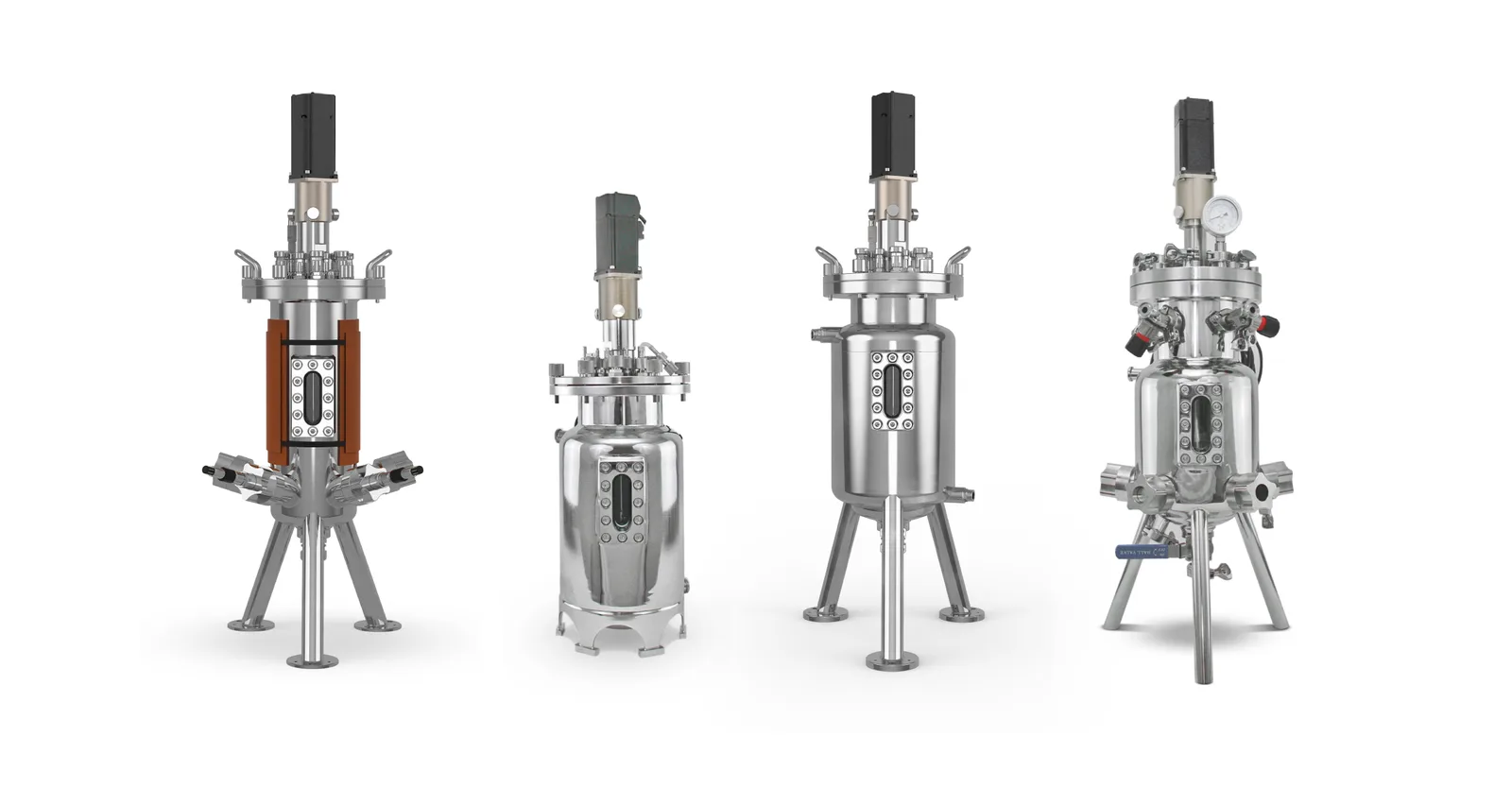
The four series
The stainless steel platform is designed to integrate seamlessly with the Biobook control ecosystem, ensuring consistent workflows across different vessel configurations and enabling reliable process transfer from bench-scale experimentation to larger pilot systems. This modular approach allows researchers to maintain consistent control strategies and experimental setups while adapting vessel formats and pressure capabilities according to process requirements.
| Feature | 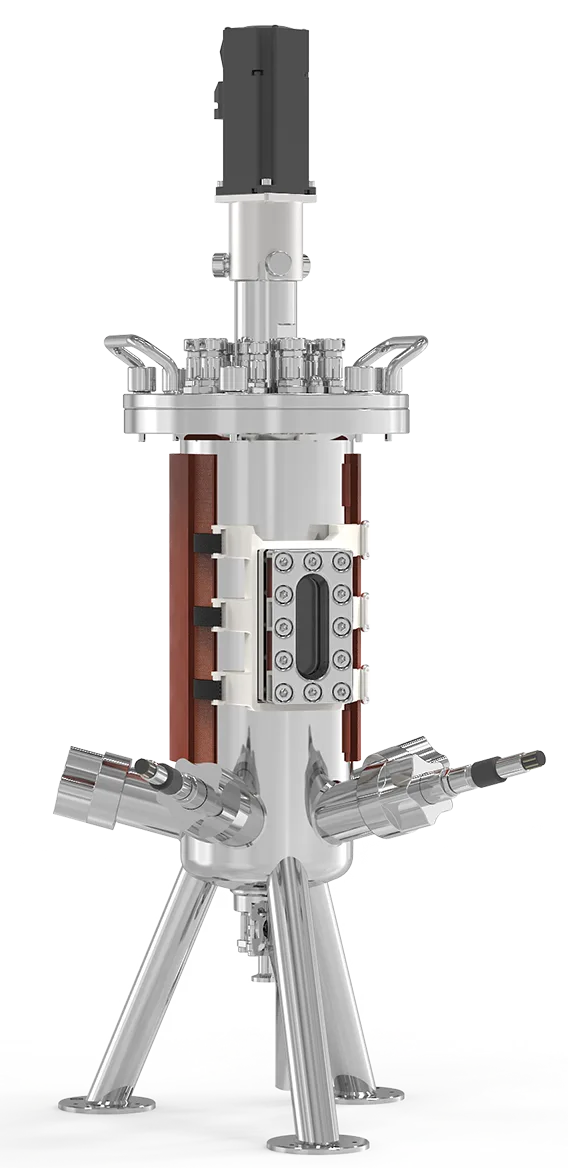 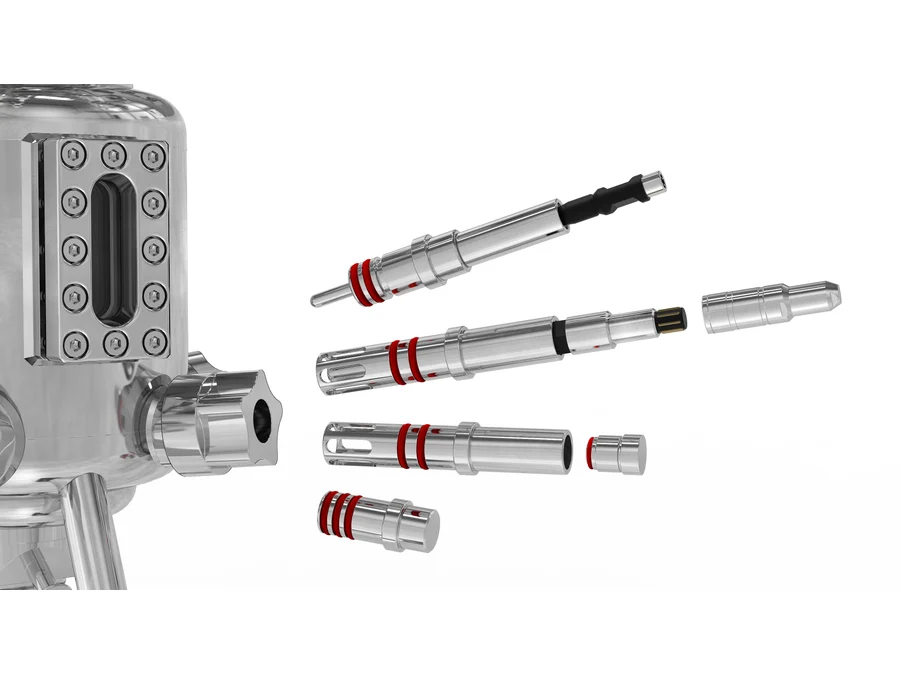 Uncompromising scalability from lab to production | 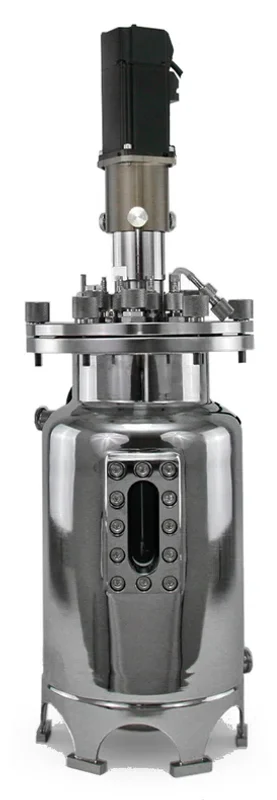 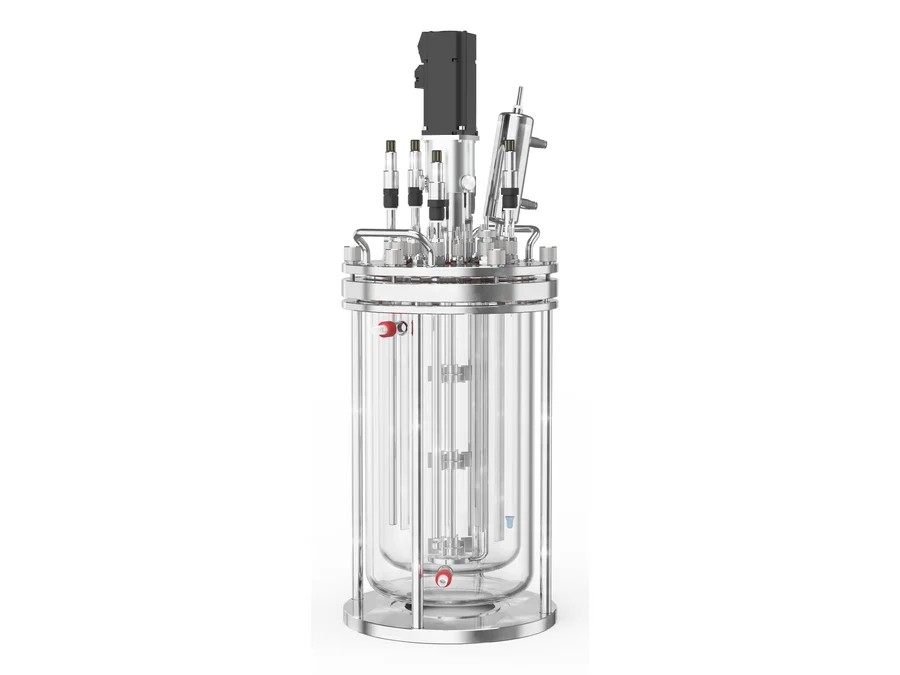 Maximise headplate utilisation, from glass to stainless steel bioreactor | 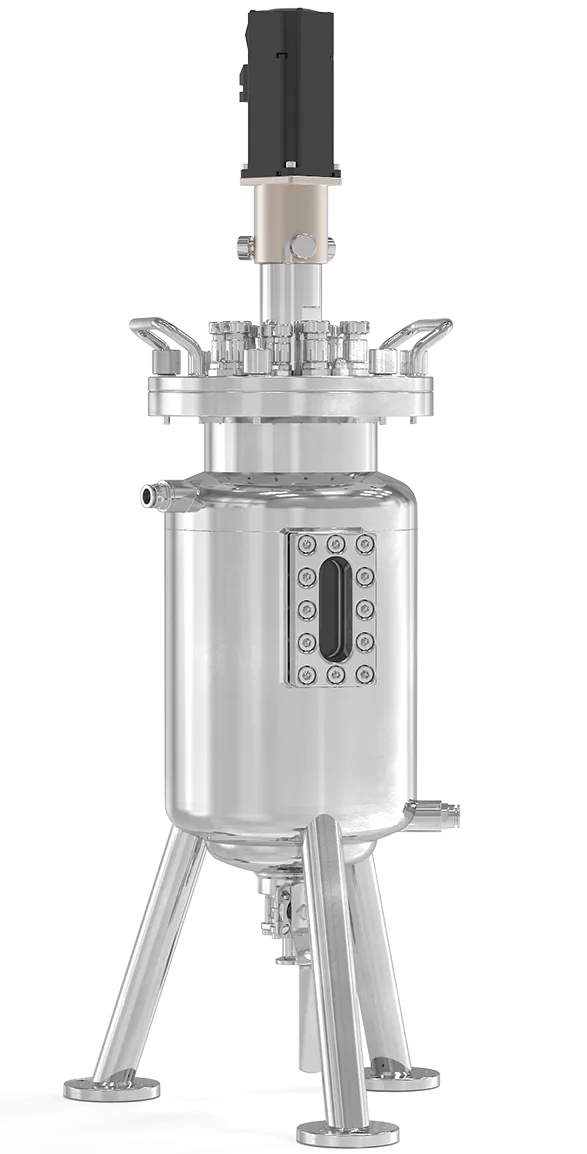 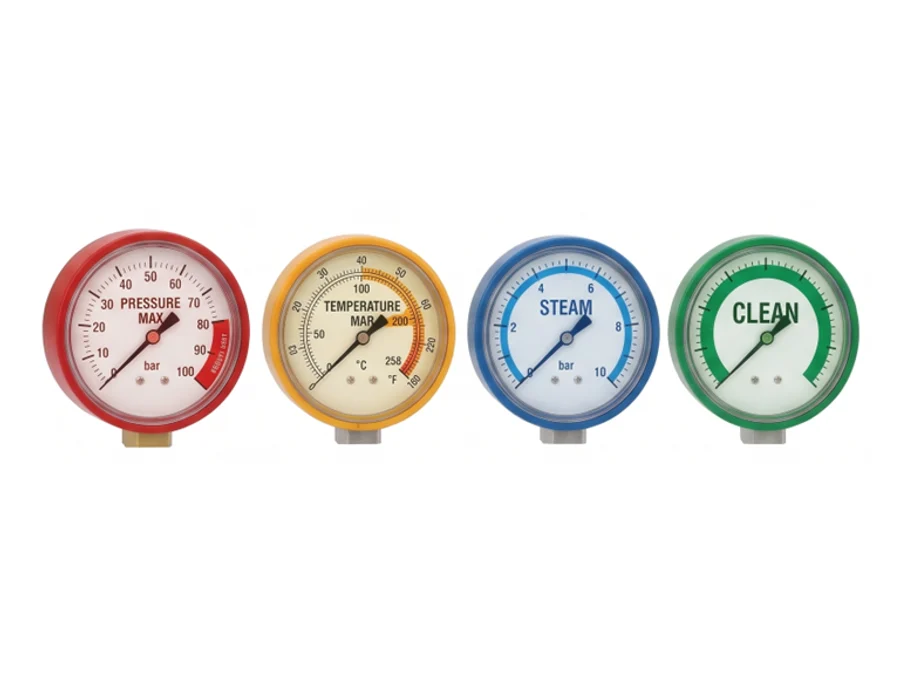 When pressure and temperature are a must | 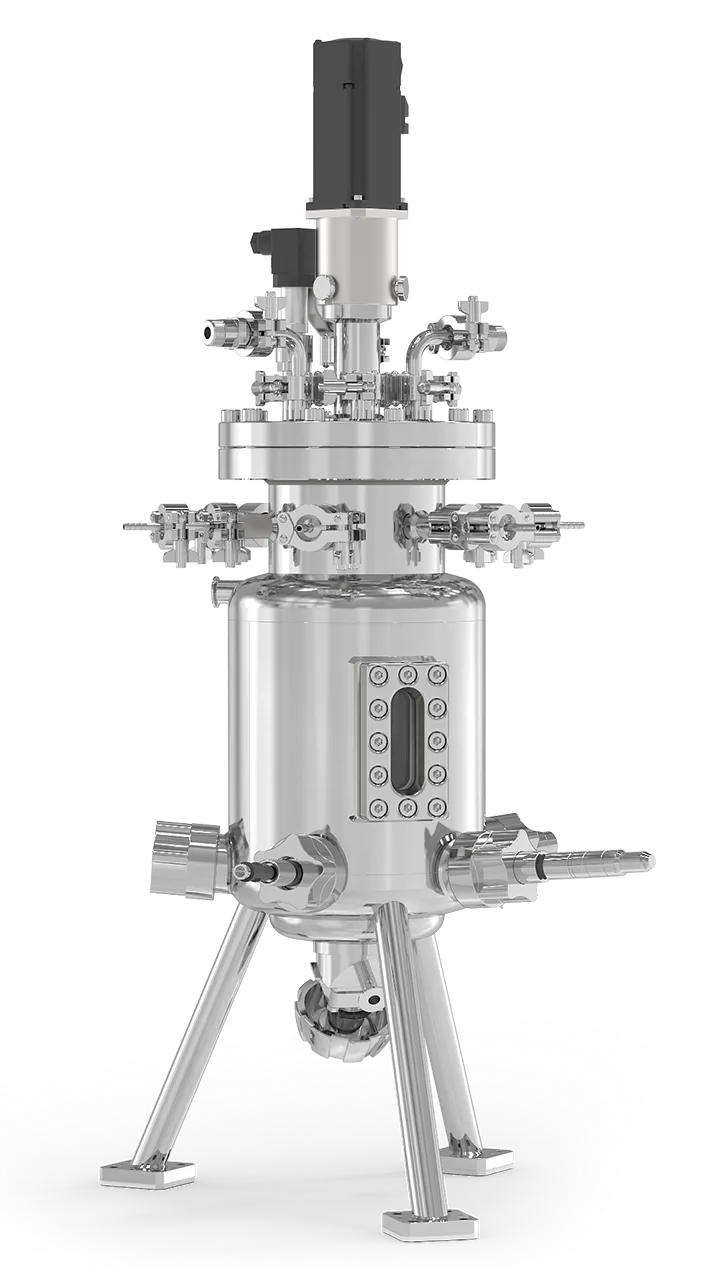 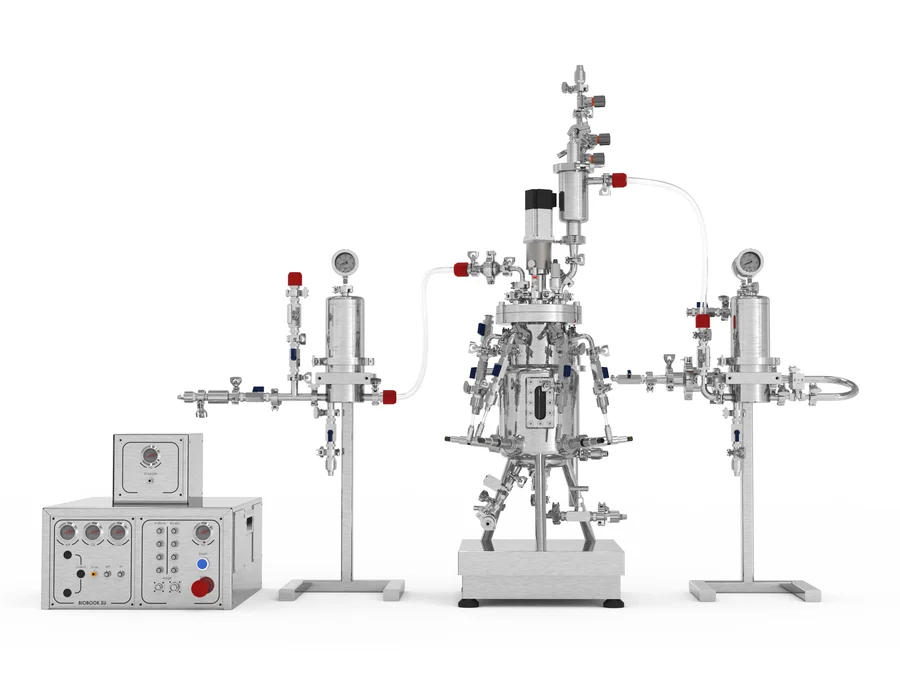 Advanced systems engineered for effortless, high-performance bioprocessing, with fully integrated thermal and chemical hygiene |
|---|---|---|---|---|
| Material | AISI 316L stainless steel | AISI 316L stainless steel | AISI 316L stainless steel | AISI 316L stainless steel |
| Total volume | 1 – 15 L | 1 – 15 L | 1 – 15 L | 1 – 15 L |
| Thermostating | Cold finger and heating mantle | Recirculating jacket | Recirculating jacket | Recirculating jacket |
| Temperature control | Biobook Wet module, cooling water or chiller | Biobook Wet module and chiller | Biobook Wet module and chiller | Biobook Wet module and chiller |
| Maximum temperature | 70 °C | 121 °C | 135 °C | 135 °C |
| Maximum working pressure | < 1 barg | < 2 barg | < 3 barg | < 10 barg |
| Sterilization method | Autoclave | Autoclave and Steam-in-Place (SIP) | Autoclave and Steam-in-Place (SIP) | Autoclave and Steam-in-Place (SIP) |
| Bottom valve | Available | Not available | Available | Available |
Accessories and custom configurations
Stainless steel bioreactors of the X and XP series can be configured with a range of custom options and design variations to meet specific process requirements. Depending on the application, vessels can be adapted with different port configurations, probe interfaces, agitation systems, spargers, sampling solutions, and instrumentation layouts. Our engineering team works closely with customers to define tailored configurations that align with process conditions, control strategies, and scale-up objectives.
Request a custom configuration- Ingold fittings. This process connection, also known as an Ingold fitting, uses a female threaded union nut on the sensor holder to connect to a fixed socket welded to the bioreactor vessel. The seal is provided by an O-ring on the holder body, whose position must match the socket length. This ensures the sensor sits flush with the vessel’s inner wall, preventing dead spaces where contamination could occur.
- Impellers. Impellers are mechanical mixing devices installed inside bioreactors and mounted on a rotating shaft. Their main function is to mix the culture medium, ensuring uniform distribution of nutrients, gases, temperature, and cells throughout the vessel. We manufacture impellers according to customer-specific drawings.
Documentation (PDF)
Technical documents in PDF · the datasheets ask for a free registration, the catalogues download without one.
Innovative solutions
for your bioprocesses
Tell us about your application: our team replies within 24 hours.

- Every system ships with a declaration of conformity and a technical file under the applicable European directives.
- Control panels are built and certified to the US standard for industrial control panels — UL file E554925.
- Pressure vessels are designed and certified to the European directive when the destination market requires it.
- For markets that require it, vessels follow the ASME VIII code; finishes, welds and connections follow ASME BPE.
- Materials, surface roughness and hygienic design are made for GMP environments. IQ/OQ qualification of the installed system is one of our services.
- Bioflex™ handles audit trail, electronic signatures and access control as required by the FDA rule on electronic records.